
Hi, I'm Traci!
I design engaging learning experiences that are accessible by design and improved through learner feedback and data.


De-escalating Difficult Customer Interactions
Scenario-based training module designed to help support professionals practice handling challenging customer situations using empathy and structured communication.
Overview
This project is a scenario-based eLearning module designed for Northstar Solutions employees in customer-facing roles. The training focuses on helping employees practice de-escalating difficult customer interactions, improving communication under pressure, and reducing unnecessary support escalations.
Audience
This training was designed for customer-facing employees at Northstar Solutions, including customer support representatives and client-facing team members handling high-volume or high-stress interactions.
The Problem
At Northstar, employees frequently interact with customers who are frustrated, confused, or upset. These interactions can escalate quickly when employees lack clear strategies for responding effectively in high-pressure situations.This can lead to increased customer dissatisfaction, longer resolution times, repeated support escalations, and increased stress for employees managing difficult conversations.
Constraints
-The module needed to be short and easy to complete during a busy workday
-Learners required a self-paced experience without instructor facilitation
-The training needed to support both desktop and mobile access
-The experience needed to remain engaging while covering emotionally challenging workplace situations
Learning Goals
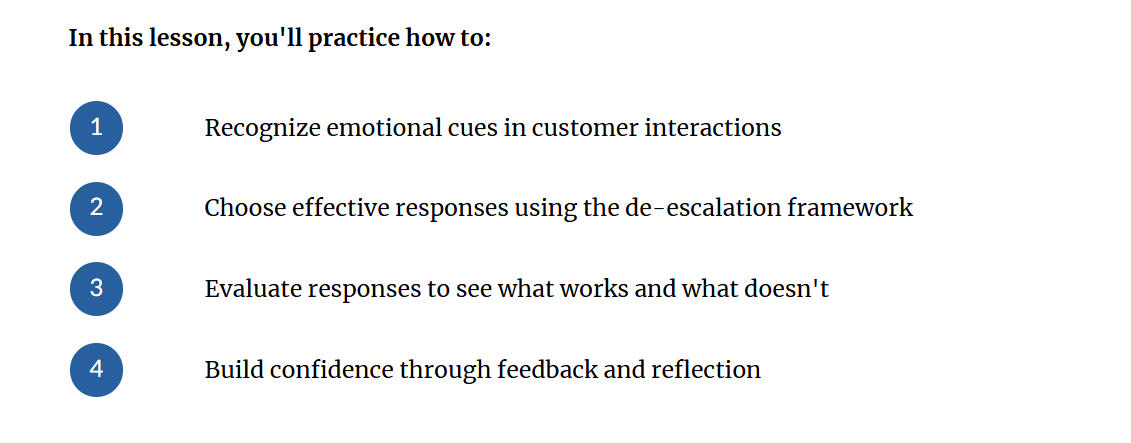
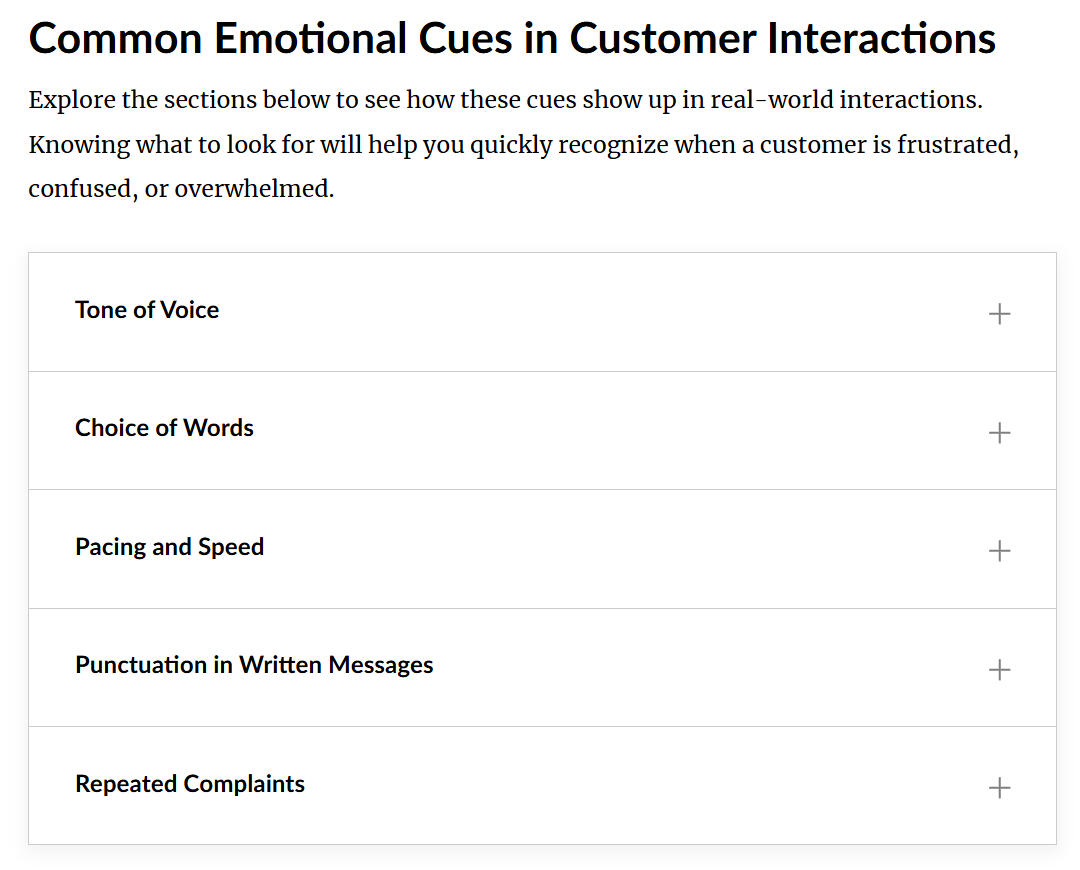
-Recognize signs of escalating customer frustration
-Select appropriate responses during high-pressure customer interactions
-Apply communication strategies that reduce tension and build trust
-Practice decision-making in realistic workplace scenarios
-Identify responses that may unintentionally increase customer frustration
Solution
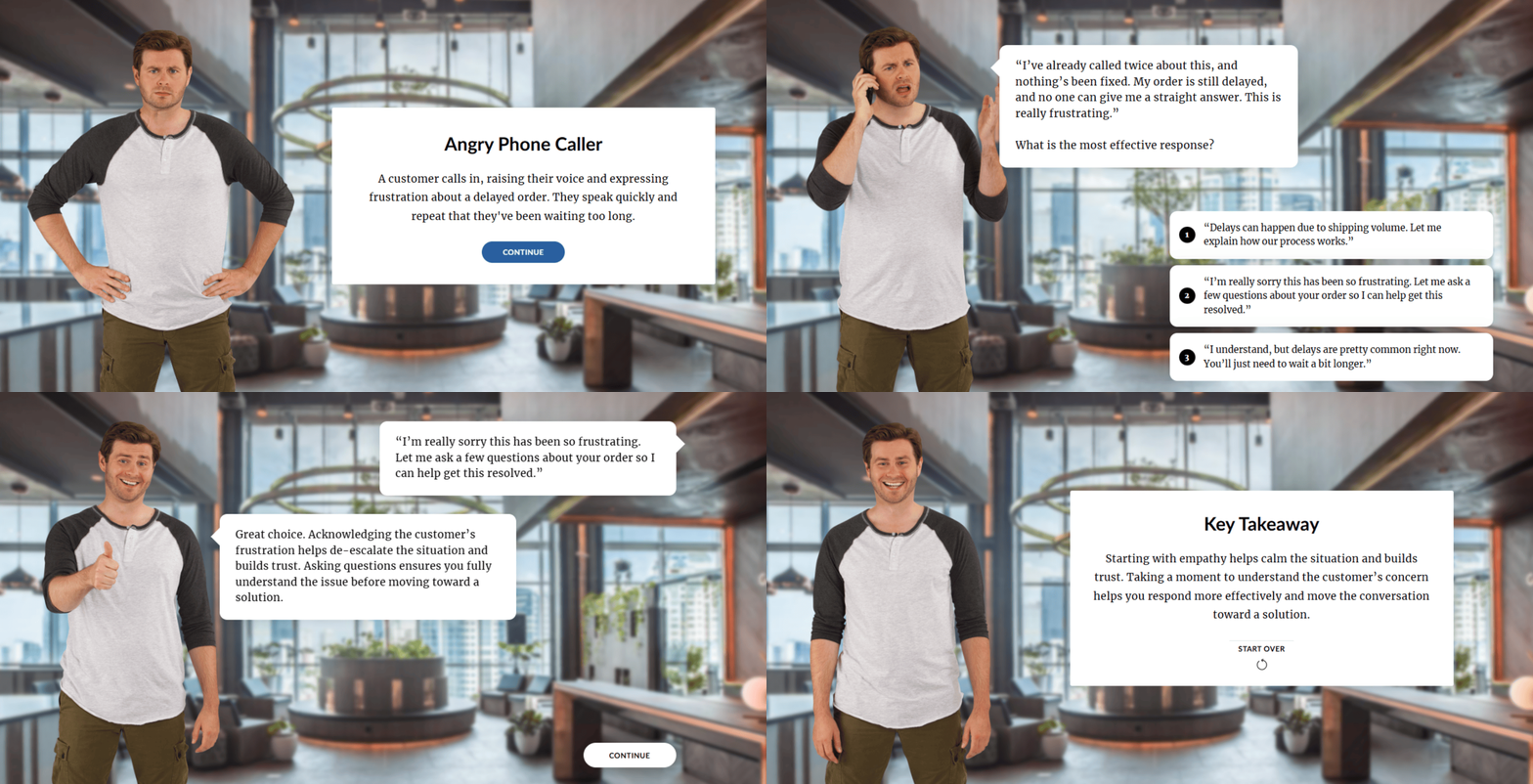
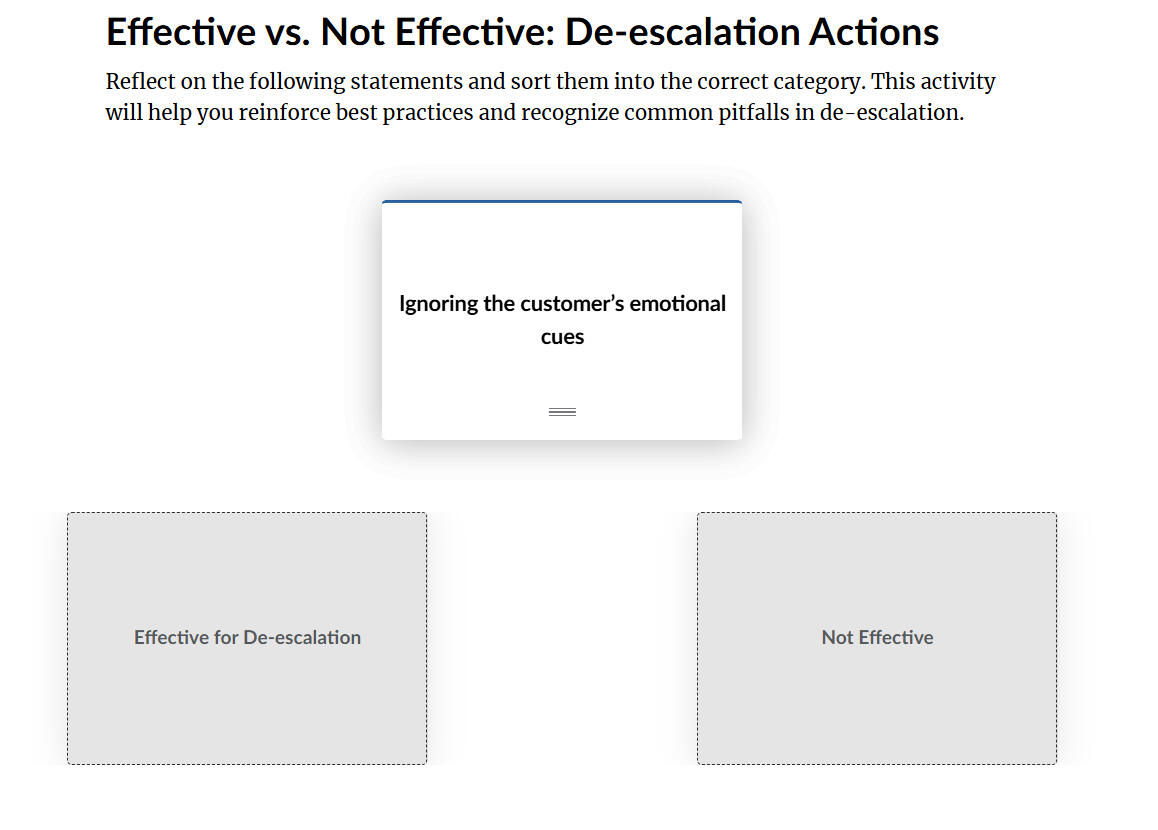
I designed an interactive, scenario-based eLearning experience that allows learners to practice responding to difficult customer situations in a safe, risk-free environment.The module presents realistic workplace conversations where learners make decisions, receive immediate feedback, and see how their choices impact the outcome of the interaction. The experience was intentionally designed to simulate workplace pressure while still providing supportive guidance and opportunities for reflection.
Companion Deliverable: Performance Job Aid
To support long-term retention and on-the-job application beyond the e-learning module, I designed a 1-page quick-reference job aid. This artifact reinforces the 4-step de-escalation framework and provides customer support reps with immediate, actionable phrasing directly at their desks.
Design Decisions
I chose a scenario-based learning approach because de-escalation is a behavioral skill that requires active practice and decision-making. The decision-making structure was designed to reinforce how tone, empathy, and response wording can influence customer outcomes. Immediate feedback was included to help learners understand why certain responses are more effective than others and to reinforce practical communication strategies.
Evaluation and Iteration
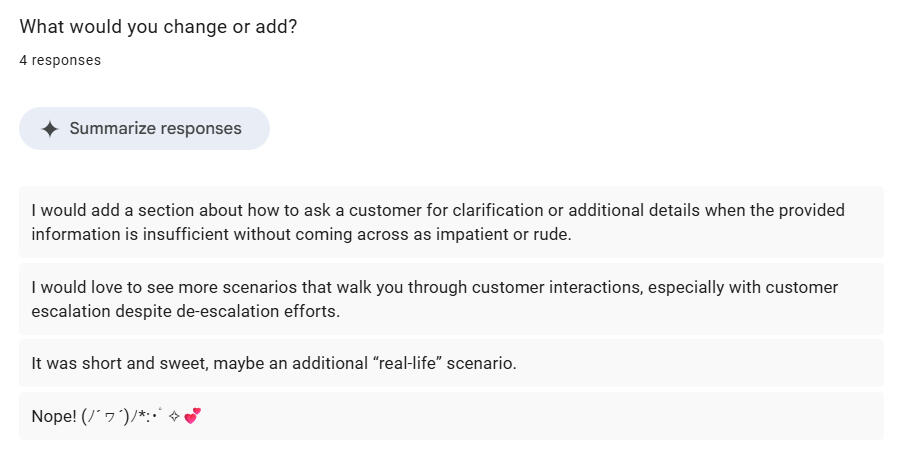
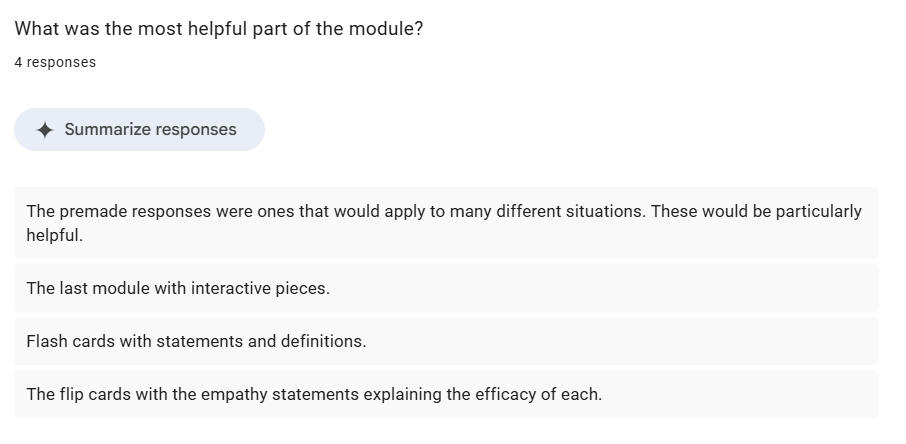
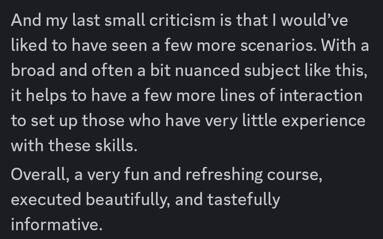
I shared the module with a small testing group and collected feedback through a Google Forms survey following completion of the training. Testers included individuals with customer service experience across multiple industries, including technical support, food service, retail, admissions, and direct customer support.Feedback from testers was highly positive overall. All participants reported that the module instructions were clear, the feedback responses helped them understand their choices, and the experience increased their confidence in handling difficult customer interactions.The feedback also identified several opportunities for improvement. One learner noted that a swipe-based interaction felt less intuitive on mobile devices and suggested a more accessible navigation approach. Additional feedback suggested expanding the module with:
-More realistic branching scenarios
-Examples involving failed de-escalation attempts
-Additional guidance for requesting clarification from frustrated customersBased on this feedback, future iterations of the module could include:
-Expanded branching conversation paths
-Additional advanced customer scenarios
-Improved mobile interaction usability
Accessibility & UDL Considerations
-Plain language was used throughout the module to improve clarity and readability
-The module was designed for both desktop and mobile viewing
-Consistent navigation and layout patterns were used throughout the experience
-Interactive elements supported active learner engagement
-Visual contrast and readability were considered when selecting colors and layouts
Tools Used
-Articulate Rise 360
-Google Forms
-Canva
Reflection
This project strengthened my understanding of scenario-based learning design and reinforced the importance of creating opportunities for active practice within workplace training.Designing the module required balancing engagement, realism, accessibility, and cognitive load while maintaining a concise learning experience appropriate for busy employees.While the final lesson had several opportunities for practice with real-world scenarios, I think I could improve future modules by including more scenarios or interactive activities in the earlier lessons.
Critiques and feedback:
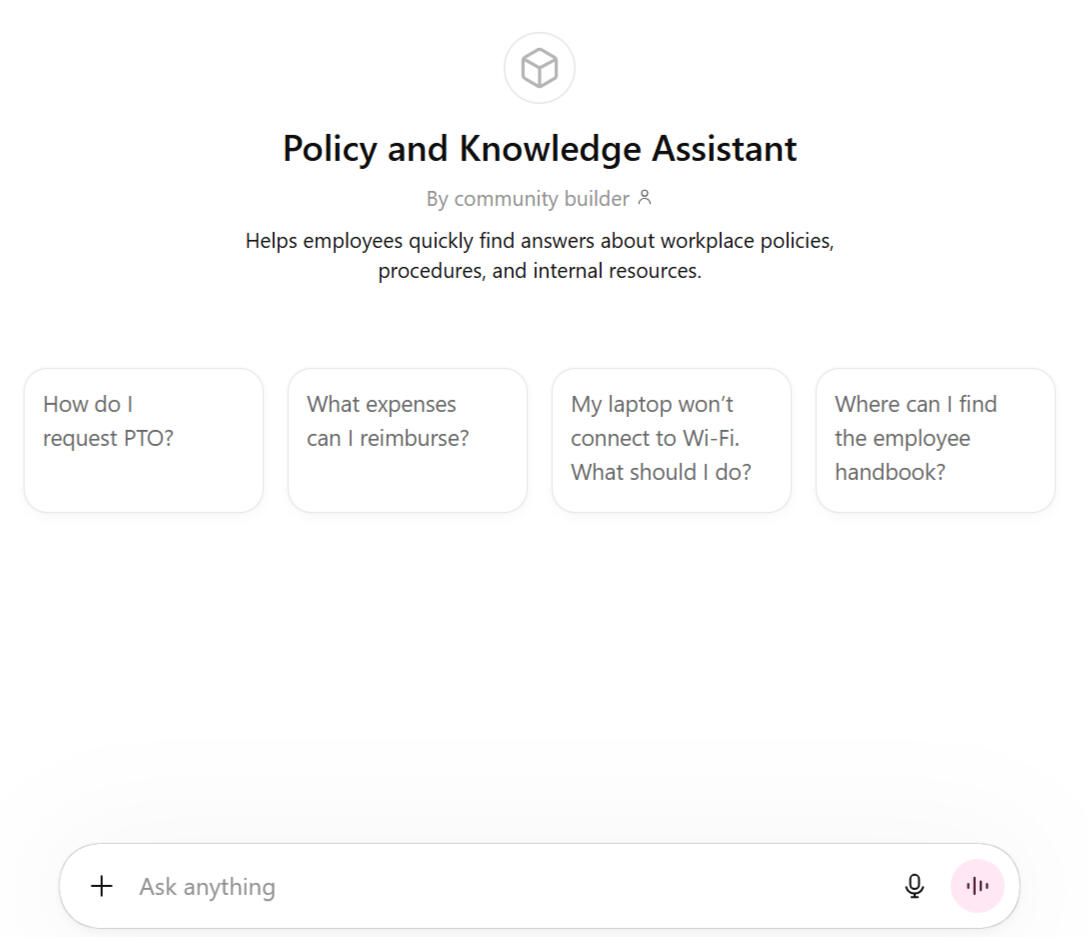
Custom GPT
An AI-powered workplace assistant created for Northstar Solutions to help employees quickly navigate company policies, onboarding resources, and internal procedures.
Overview
This project is a custom AI-powered workplace assistant designed for Northstar Solutions employees. The assistant helps employees quickly locate information about company policies, workplace procedures, internal systems, and common support questions without interrupting coworkers or searching through multiple documents.
Audience
This assistant was designed for Northstar employees across multiple departments, including customer support representatives, hybrid and remote employees, and new hires who may need quick access to workplace information and internal resources.
The Problem
Employees often spend unnecessary time searching through policy documents, asking coworkers routine questions, or waiting for responses from managers and support teams. Information is frequently spread across multiple systems and documents, making it difficult to quickly locate accurate answers.This can lead to workflow interruptions, inconsistent information sharing, delayed task completion, and frustration for both employees and support staff.
Project Goals
-Reduce time spent searching for workplace information
-Provide employees with quick, consistent policy guidance
-Support employees within their workflow using conversational AI
-Encourage appropriate escalation to HR, management, or IT when necessary
-Improve accessibility and usability of internal documentation
Solution
I designed a custom GPT-based workplace assistant that references uploaded internal documentation to answer common employee questions in plain language.The assistant uses multiple knowledge sources, including:-Employee handbook
-PTO and time off policy
-Expense reimbursement policy
-IT troubleshooting guide
-Workplace conduct and HR escalation policy
-Internal systems quick referenceThe assistant was designed to provide concise, easy-to-scan responses while directing employees toward appropriate next steps or escalation resources when needed.Example use cases include:-Requesting PTO
-Understanding reimbursable expenses
-Troubleshooting VPN or Wi-Fi issues
-Locating workplace policies
Identifying when to contact HR or IT support
Design Decisions
I designed this assistant as a performance support tool rather than a replacement for formal training. Employees often need immediate answers while completing tasks, making conversational support more effective than requiring users to search through lengthy documentation.I intentionally used plain language, structured formatting, and concise responses to reduce cognitive load and improve usability for employees working in fast-paced environments.The uploaded knowledge documents were intentionally designed to cover realistic workplace scenarios while remaining concise enough for effective retrieval and response generation.I also designed the assistant to clearly communicate limitations and escalation pathways. Topics involving harassment, legal concerns, sensitive employee information, or HR investigations were intentionally excluded from the assistant’s scope and redirected to appropriate human support channels.
AI Guardrails & Safety Considerations
This assistant includes several guardrails designed to support safe and appropriate workplace use.The assistant:Does not provide legal advice or HR determinations
Does not process sensitive employee or personnel information
Redirects harassment, discrimination, and workplace conduct concerns to HR
Encourages escalation to managers, HR, or IT when appropriate
References uploaded documentation whenever possible
Avoids generating unsupported policy information outside of provided resourcesThese guardrails were included to improve reliability, reduce misinformation risks, and reinforce appropriate escalation procedures.

A Little About Me
I am an instructional designer focused on creating engaging, accessible learning experiences that help people build confidence and apply skills effectively in their work.With a background in education, I bring experience in learner-centered design, assessment, and adapting instruction to support different learner needs. I enjoy building practical training solutions that are interactive, accessible by design, and continuously improved through learner feedback and data-informed iteration.Outside of design work, I enjoy creative and problem solving hobbies including puzzles, reading, drawing, building Lego sets, exploring new technology, and gaming. Curiosity is a big part of how I approach both learning and design.


Traci Jones
Elementary Educator | Curriculum & Digital Learning Designer
Arlington, TX | Portfolio: tracijoneslxd.com | LinkedIn: linkedin.com/in/traci-jones-lxd
Summary
Elementary teacher with 5+ years of classroom experience and a strong background in curriculum design, educational technology, and visual learning resources. Skilled at breaking down complex concepts into engaging, interactive lessons and quick-reference materials for diverse learners. Experienced in analyzing performance data, managing multi-channel parent and stakeholder communications, and building clean, responsive websites and digital learning tools using no-code platforms and foundational web markup.
Areas of Expertise
• Instruction & Curriculum: Lesson Planning, Differentiated Instruction, Curriculum Alignment, Small-Group Interventions, Formative & Summative Assessments, Classroom & Time Management.• Instructional & Digital Tools: Articulate Rise, Canva, Google Classroom & Workspace, Microsoft Office, Interactive Whiteboards, Educational Learning Software.• Web & Digital Media: No-Code Web Builders (Carrd), Basic HTML/CSS Familiarity, Markdown, Responsive Layouts, Domain/DNS Setup, Digital Asset Optimization (GIF, PNG, PDF).• Communication & Collaboration: Parent & Stakeholder Communication, Cross-Functional Team Planning, Workshop Facilitation, Continuous Professional Learning.
Digital & Instructional Projects
Customer De-Escalation & Conflict Resolution Module | E-Learning & Visual Design• Built an interactive, scenario-based training module in Articulate Rise to guide learners through a 4-step customer de-escalation framework.• Developed realistic decision paths where users navigate an escalating customer call and receive immediate, context-specific feedback based on their choices.• Designed a 1-page visual job aid in Canva as a desk-side companion piece for on-the-job reference.Web Design & Digital Media Projects | Freelance / Independent• Built and launched responsive, mobile-optimized landing pages and resource hubs for independent creators using Carrd.• Managed custom domain routing, DNS records, and asset hosting to ensure fast load times and clean user navigation.• Utilized Markdown, basic HTML/CSS adjustments, and compressed visual assets to format content cleanly across devices.
Teaching & Education Experience
First Grade Teacher | Patrick Elementary, Arlington ISD
August 2025 – Present• Design and deliver differentiated reading, phonics, and math instruction supported by custom visual and digital learning resources.• Analyze assessment data to identify learning gaps and adjust instruction, interventions, and learner support.3rd Grade Teacher | Cheney Hills Elementary, Birdville ISD
August 2024 – May 2025• Adapted district curriculum into engaging lessons, guided practice, and project-based learning experiences across all core subjects.• Used performance data and learner needs to adjust pacing, instructional strategies, and targeted support.Elementary Teacher & Math Interventionist | International Leadership of Texas
August 2021 – May 2024• Designed and delivered instruction across multiple roles in grades 2–5, including departmentalized math, self-contained instruction, and Tier 2/3 intervention.• Developed scaffolded learning activities and targeted small-group interventions based on student performance data.
Education & Certifications
B.S. in Interdisciplinary Studies (EC–6)
University of North TexasTexas State Educator Certifications
• Core Subjects (EC–Grade 6)
• English as a Second Language (ESL) Supplemental

Contact Me!
I'd love to hear from you!
Send me a message using the form and I’ll get back to you soon.
Elementary Educator | Curriculum & Digital Learning Designer